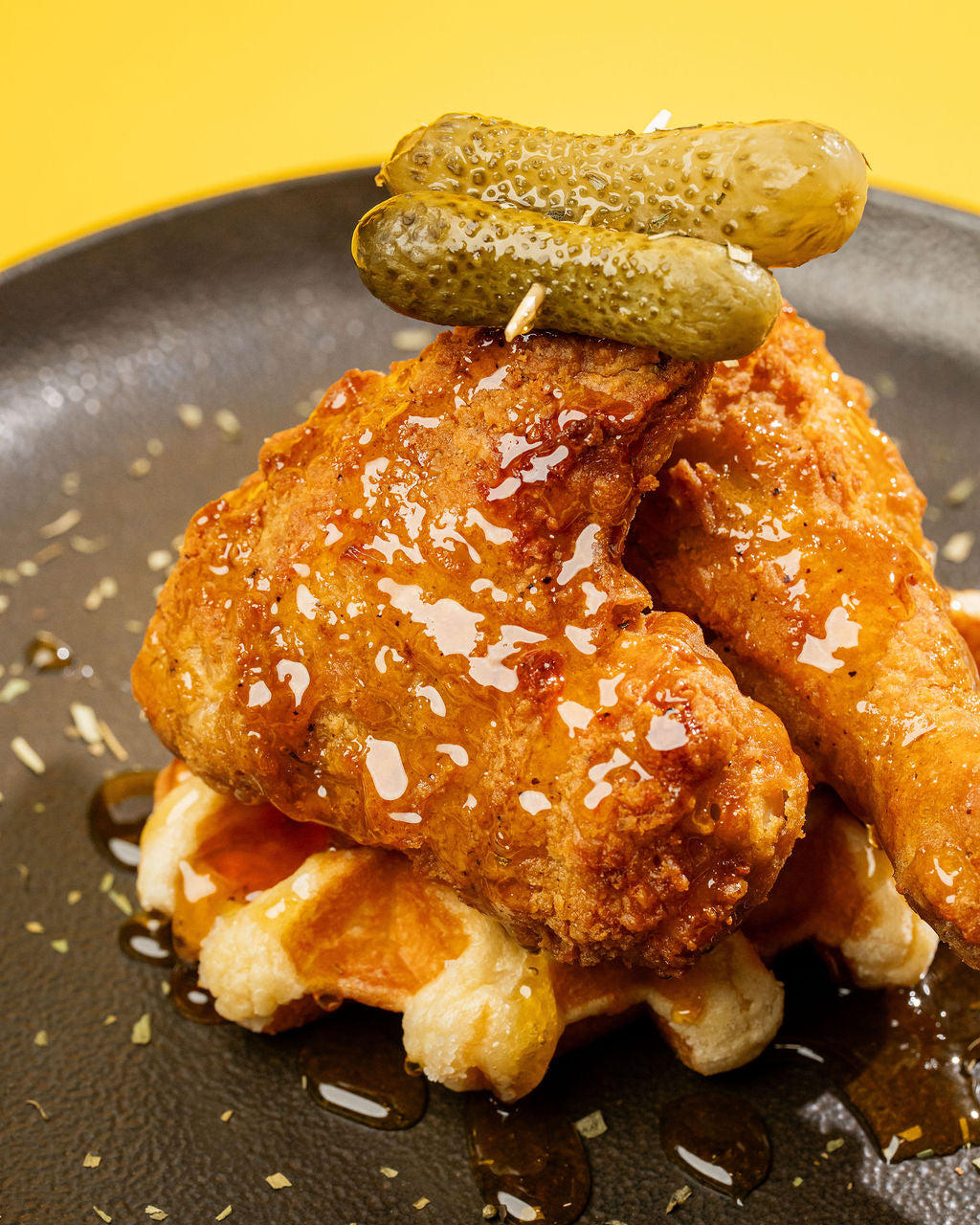
Why You're Suddenly Obsessed with 'Swicy' Food
If you've ever felt addicted to the mix of sweet and hot, you're not alone. There's a fascinating scientific reason your brain can't get enough of it, and it's all part of the wider chemistry of flavour. This guide is for anyone who wants to understand what 'swicy' is, the science that makes it so craveable, and the principles that define a great flavour experience. Get ready to leave one-note flavours in the dust.
Key Takeaways
-
It's a chemical pleasure loop where your brain gets a feel-good endorphin rush from the chilli heat, followed by instant relief from the sweet taste, creating an addictive cycle you want to repeat.
-
The Flavour Trinity means the best swicy flavours aren't just sweet and hot. They must be balanced with a savoury element to add depth and complexity.
-
Professional Method Matters because commercially produced condiments often use a slow infusion process that smoothly blends flavours, which is why they differ from simply mixing ingredients at home.
What Actually is 'Swicy' Food?
'Swicy's' simply a mix of the words "sweet" and "fiery." It describes a flavour that balances the heat from chillies with the sweetness of sugar or honey. It's more than just a hot condiment. A good 'swicy' product, such as a quality hot honey, creates a complex experience where the sugar calms the initial burn, which makes you want to go back for another bite right away.
The Science of the 'Swicy' Craving
Your obsession with sweet heat isn't random. It's a clever pleasure loop happening inside your brain. Here's the 3-step chemical trick your nervous system is falling for:
-
The Spice Deception: The kick from chillies comes from a compound called capsaicin. The National Institure of Health confirms it connects to your mouth's TRPV1 receptors. These are the same receptors that detect fire, so it fools your brain into thinking it's being burned (without any real harm). That's what creates that spicy taste.
-
The Endorphin Payoff: Your brain, thinking it's under attack, releases endorphins and dopamine. These are your body's personal feel-good chemicals, creating a mild adrenaline rush. Your brain releases them to deal with the "threat," creating a mild, happy buzz.
-
The Sweet Relief: Just as that rush begins, the sugar or honey notes deliver. It soothes those same receptors, giving you instant comfort without killing the buzz. Consumers continue to show they love sweet sensations.
This creates a deeply addictive cycle. The thrill of the heat gives you a hit of natural, feel-good chemicals. This is followed by the immediate comfort of the sweet. That's the real reason you can't stop reaching for more. This flavour fusion is a scientifically proven winner.
Why This Food Trend is Exploding Now
If you feel like you're seeing ‘swicy’ on every menu, you aren't imagining it. A 2023 Roy Morgan poll showed 68% of Australians already eat spicy food, which set the stage for this new trend. Innova Market Insights later made it official by naming "Sweet Heat" a major food trend.
Want to taste the science for yourself?
Explore our range to master the swicy trend.
Key Principles of Great 'Swicy' Flavours
Understanding the science is one thing, but appreciating the craft is another. Here are the core principles that separate an average 'swicy' product from an exceptional one. This is how you start creating truly exceptional flavour experiences.
Principle #1: The Importance of Flavour Balance
The best 'swicy' experience isn't just about two notes. It needs a third, crucial element, which is a deep, savoury character. This savoury anchor stops the sweetness from becoming too sickly and gives the spice a complex depth that goes beyond just raw heat. A glaze containing only honey and a hot sauce, for example, will taste sweet and spicy. But a glaze that also includes a savoury source will have a more satisfying and complex flavour profile. The perfectly balanced sweet and spicy taste is what truly enhances these kinds of dishes.
Principle #2: Complementary Food Pairings
Understanding the science of flavour pairing is key to appreciating 'swicy' profiles. Here are some classic food pairings that work well, based on our product range. These are great combinations to explore.
|
The Product |
What It Tastes Like |
Suggested Pairings |
|
A golden, lightning-fast upgrade of pure sweet heat. |
Drizzle on fried chicken, pepperoni pizza, or baked feta. |
|
|
A deep, savoury warmth with aromatic spice and a satisfying crunch. |
Spoon over morning eggs, a simple bowl of pasta, or fresh dumplings. |
|
|
A rich, creamy kick with a ridiculously smooth finish. |
The go-to dip for hot chips and a proper burger. |
Principle #3: The Difference in Professional Production Methods
There's a significant difference between a professionally manufactured 'swicy' condiment and simply mixing ingredients at home. Many commercial products use a slow infusion process under controlled conditions. This method carefully extracts compounds, resulting in a perfectly smooth liquid where the heat and sweetness are completely blended. In contrast, a simple mix often results in a gritty texture and a harsh, uneven flavour where the heat "sits on top" of the sweet element rather than blending with it. This difference in production is why professionally made condiments, like a bottle of UmamiPapi Hot Honey, often have a superior texture and more cohesive flavour.
Frequently Asked Questions
What is the difference between swicy and hot sauce?
No, 'swicy' and traditional hot sauces serve different culinary purposes. A hot sauce, like a vinegar-based Tabasco, is primarily designed to add raw, sharp heat and acidity. In contrast, a 'swicy' product, like a Hot Honey or a Gochujang glaze, is formulated to create a balanced and complex profile. For a home cook deciding between them, a hot sauce is best for adding a simple kick, while a 'swicy' condiment is better for building a layered, craveable flavour on foods like pizza, fried chicken, or roasted vegetables.
What is the role of MSG in swicy products?
MSG (monosodium glutamate) is the sodium salt of glutamic acid, an amino acid found naturally in foods like tomatoes and parmesan cheese. It provides a savoury or 'umami' flavour. In 'swicy' products, its function is to add a savoury foundation that balances the sweet and hot elements, creating a more complete and satisfying taste.
Do you need a high tolerance for swicy food?
Not at all. The 'swicy' trend is popular specifically because it makes these flavours more approachable for a wider audience. Unlike a pure hot sauce that focuses solely on heat level (measured in Scoville Heat Units), a balanced 'swicy' condiment uses a sweet element like honey or sugar to temper the initial burn from the capsaicin in chillies. This trade-off creates a pleasant, warm heat rather than a punishing one, allowing the actual flavour of the peppers to be enjoyed. If you typically find hot food too intense, a mild 'swicy' product's an excellent entry point.
Final Verdict
You now have the complete blueprint for the 'swicy' phenomenon. You understand the science that makes it addictive, the cultural forces that made it popular, and the principles that define a high-quality product. It's time to stop settling for 'meh' meals and start appreciating food that's genuinely exciting. These spicy pairings are here to stay.
Now that you know the secret, the fastest way to experience that perfect 'swicy' balance is with products that have been crafted specifically to deliver it. The flavour rebellion starts in your kitchen.
Ready to make every meal unforgettable?
See our full range of flavours.